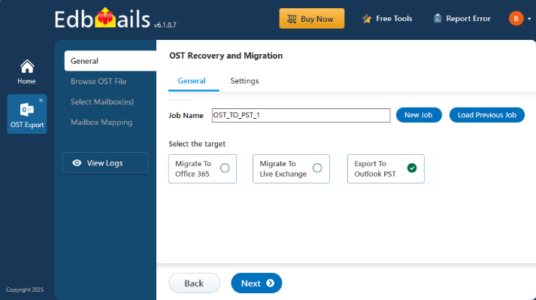
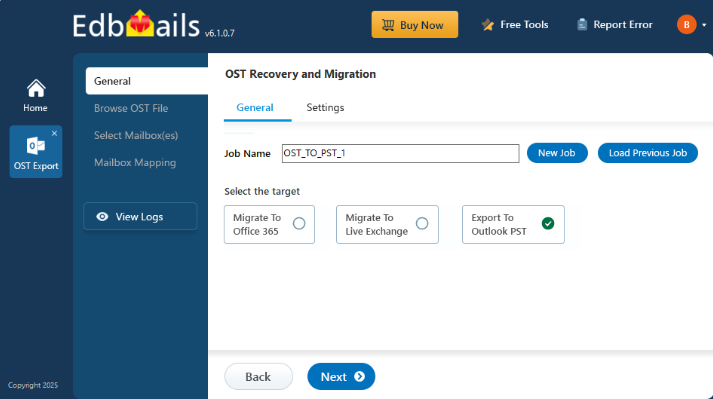

Microsoft Outlook uses different data file formats for different purposes, with OST and PST being two of the most commonly encountered files. An OST file is generally associated with an Outlook profile connected to Microsoft Exchange or Microsoft 365. It stores a locally synchronized copy of mailbox information, allowing Outlook users to work with previously synchronized data when the server connection is temporarily unavailable. A PST file serves a different purpose. It can be used to store Outlook messages and other items such as contacts, calendars, and tasks. PST files are commonly used when Outlook data needs to be stored, transferred, or accessed independently of the original synchronized mailbox. The distinction becomes particularly important when an Outlook profile or mailbox is no longer available. Simply changing an OST file extension from .ost to .pst does not convert the file. The underlying data structure must be processed into a valid PST file. When the original mailbox and profile cannot be restored and the OST contains information that is still required, an OST to PST Converter may be used to recover accessible mailbox data and export it into PST format. Before attempting recovery, it is advisable to preserve the original OST file and, where possible, work with a copy. This helps protect the source data during the recovery process.